An NFT marketplace for people who do not want a crypto app
Team. Sportek's founders, a small engineering team, and me as the only designer.
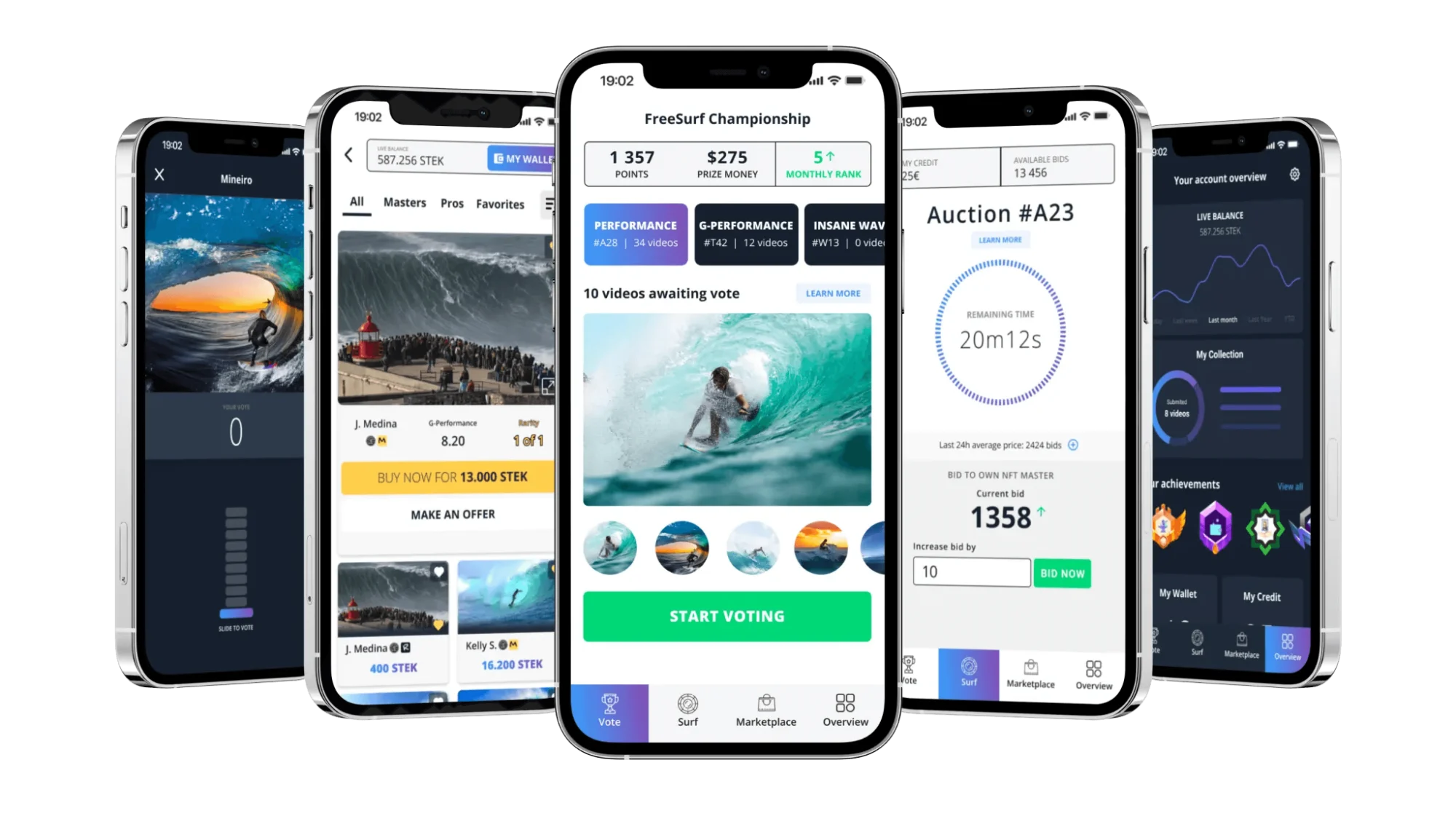
Surf fans owning moments from competitions, without ever meeting the word wallet first. I designed the whole MVP: the voting that gets people in, the marketplace they graduate to, and the collection that makes it worth staying.
Adoption figures from a beta, with no retention or revenue behind them that I can publish. The onboarding target, first look to first purchase in under sixty seconds, was a design goal I hit, not an average I measured across users.
The situation
Sportek wanted surfers and fans to own moments from competitions. The people they wanted did not own a wallet and were not about to get one.
Prize money in surfing reaches a small number of people at the top. Sportek wanted to route rewards to athletes and creators directly, and the mechanism they picked was ownership: clips from competitions, owned and traded by the people who care about them.
The hard part was never the blockchain. It was that the audience for surf clips and the audience for crypto apps barely overlap. A surf fan arriving at a wallet setup screen is a surf fan leaving. Everything below follows from taking that seriously rather than treating it as an education problem to be solved with a tooltip.
What I decided
Open on voting, not on the marketplace
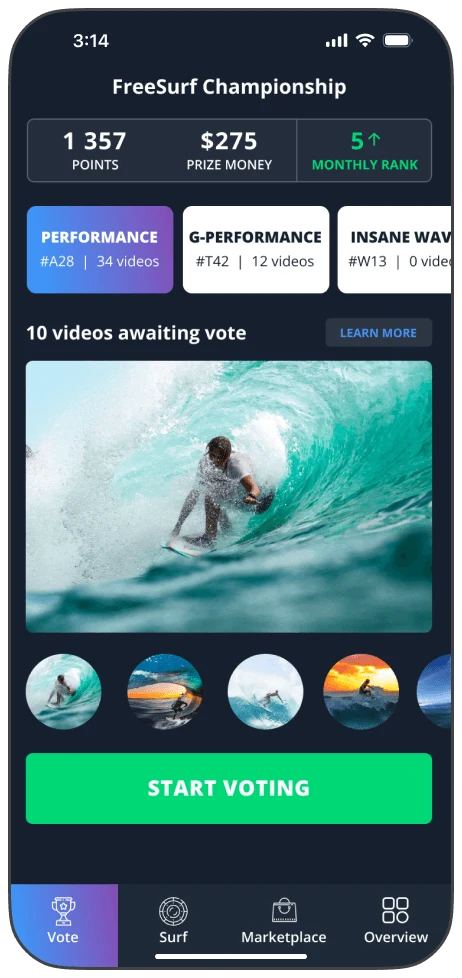
The bottom bar reads Vote, Surf, Marketplace, Overview, and the app opens on Vote. You arrive at a championship with ten clips waiting for your opinion, not at a grid of things for sale.
Voting costs nothing and needs no account to understand. It also produces the thing the marketplace needs, which is a reason one clip is worth more than another. Ownership became the second screen somebody met, not the first.
- Instead of
- Opening on the marketplace, which is what a marketplace app does and what the brief described.
Make it collecting, never purchasing
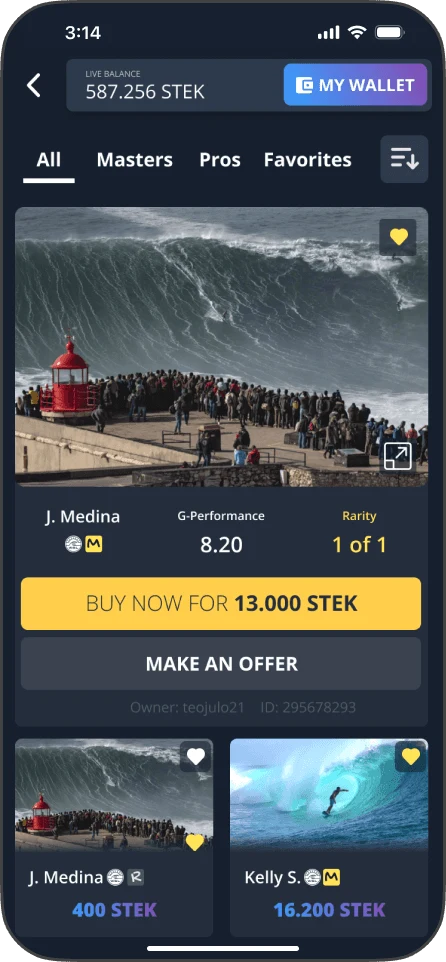
A listing shows the rider, a performance score and a rarity, then Buy now and Make an offer. No gas, no minting, no floor price. The unit is a wave somebody surfed, described the way a fan would describe it.
This is the decision I would defend hardest. The vocabulary of a category is not neutral: it tells a newcomer whether the thing was built for them. Every word that only makes sense after a tutorial is a word that sorts your audience into people who already belong and people who do not.
- Instead of
- The vocabulary every other NFT product used at the time: mint, gas, wallet, floor price.
No wallet until after the first thing worth owning
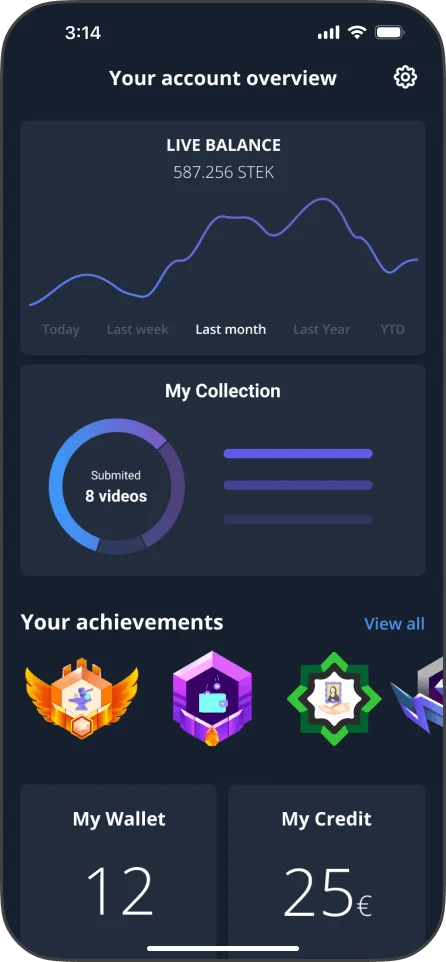
The published target was first look to first purchase in under sixty seconds, and the only way to get there is to stop asking for things. The wallet exists, and the account screen has a balance, a collection and achievements in it. You simply do not meet any of that until you have found something you want.
- Instead of
- Wallet creation and a seed phrase up front, which is the standard Web3 opening and where that audience leaves.
What the numbers are, and are not
2,000+ beta users, 5,000+ NFTs created, 300+ marketplace transactions.
Those are adoption figures from a beta. They tell you people arrived, made things and traded some of them. They do not tell you whether anybody came back, and I have no retention or revenue behind them that I can publish.
The sixty second onboarding figure is a design target I hit in testing, not an average measured across two thousand real users. I would rather say that than let a number do work it has not earned, which is the same rule every other page here follows.
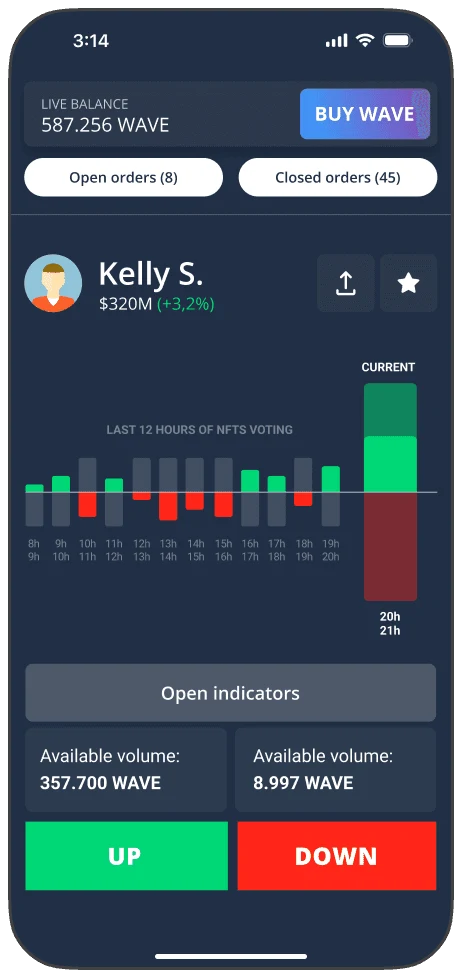
The trading view below was part of the MVP. It is the one surface I would interrogate hardest today, because a candlestick chart and an up or down button invite a very different relationship to a surf clip than collecting does.